Shared memory
Anchor Recall
Remember together.
Anchor Recall restores continuity across conversations, events, media, and decisions so people can recover what happened without arguing over fragments.
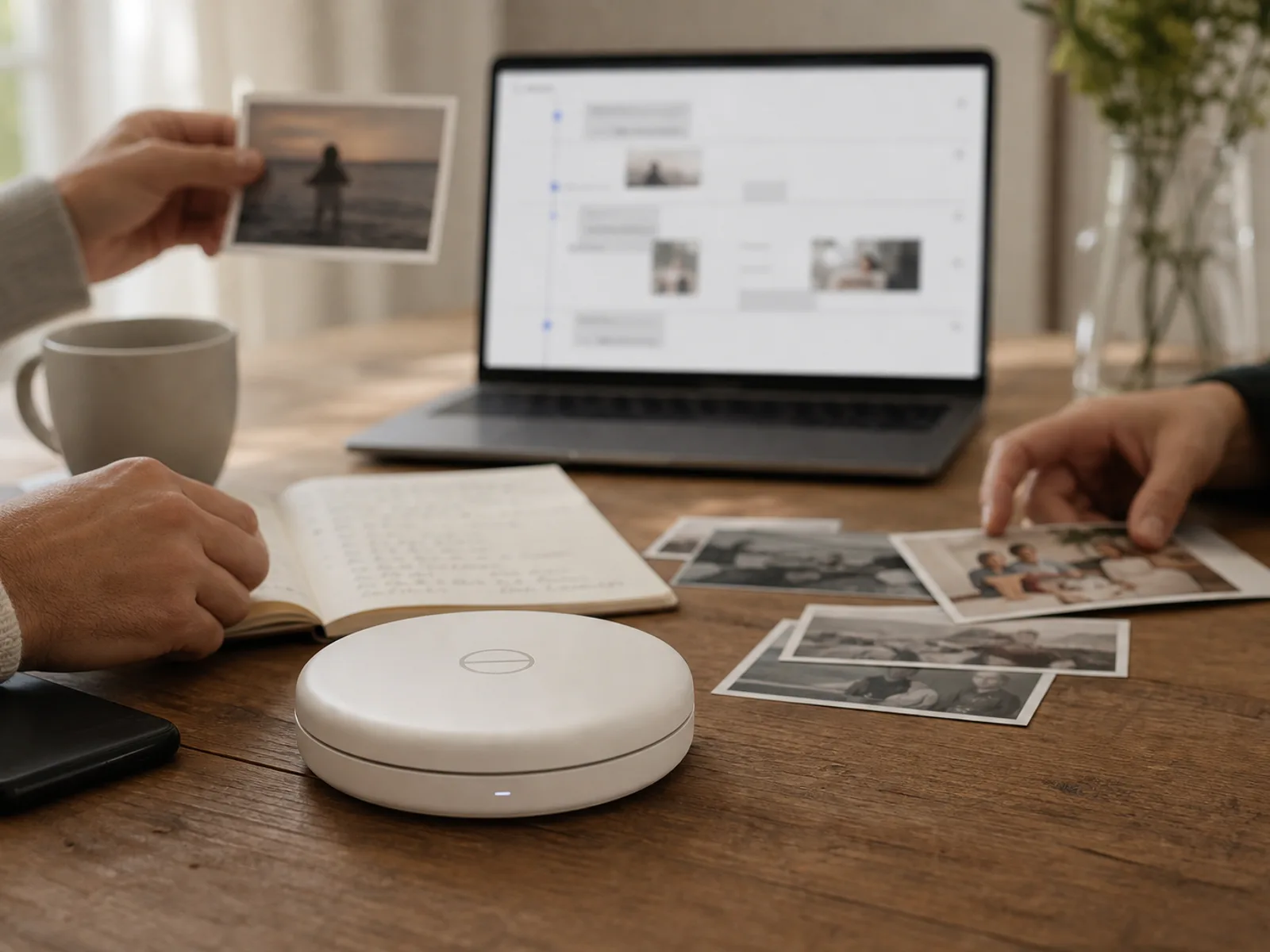
- Reconstruction
- 98.7%
- Unresolved Accounts
- 3
- Source Coverage
- 41/46
Anchor Recall is a shared-memory product for reconstructing reliable timelines from personal notes, device context, and consented group history.
A memory layer that preserves nuance while reducing drift.
Reconstructed timeline
Conflicting accounts remain visible.
Recall does not flatten memory into a single story. It keeps the reconstruction useful while preserving where people, devices, or records still disagree.
Three-source reconstruction
14:06ConvergedCalendar, photo timestamp, and arrival sensor agree within 90 seconds.
15:18ContestedTwo participants remember the call before the decision; one device log places it after.
15:41HeldRecall keeps both accounts attached until a reviewer accepts a canonical order.
16:42ResolvedHandwritten note added as evidence without deleting the earlier disagreement.
Built for
Families, teams, and communities that need trustworthy collective memory.
Capabilities
- Event reconstruction from messages, media, notes, and assistant records.
- Source-aware memory cards that show confidence, authorship, and disagreement.
- Consent-first recall controls for private, shared, and inherited memories.
- Timeline repair for gaps, duplicate entries, and conflicting accounts.
What changes
- People can find decisions and context without searching every app.
- Conflicting memories become visible instead of silently overwritten.
- Shared history remains useful without flattening personal perspective.
Common uses
- Recover the reason behind a family or team decision.
- Build a shared chronology after travel, care events, or projects.
- Turn scattered records into a durable memory graph.
Questions people ask about Anchor Recall
What does Anchor Recall do?
Anchor Recall helps trusted groups reconstruct and preserve shared memories, including the sources and confidence behind each remembered event.
How does Recall handle disagreement?
Recall can show multiple perspectives side by side, mark uncertainty, and keep provenance so a shared record does not erase legitimate differences.